
Latest News
AdBlue Ingredients: What is AdBlue Made Of?
There are many myths surrounding AdBlue and its ingredients. Some believe that it’s made of pig urine and some believe it’s a highly dangerous liquid: both of which aren’t true.
Adblue is actually a high purity, chemically manufactured solution of high-purity urea (32.5%) and deionised water (67.5%). As the urea solution is mostly water-based, it poses little risk to humans and is not harmful to the environment in any way, nor is the solution flammable or hazardous.
The colourless liquid of Adblue is an essential component of selective catalytic reduction (SCR) technology, which is one of the most effective systems for reducing nitrogen oxide levels in the exhaust fumes generated by diesel engines in vehicles.
As a UK manufacturer of AdBlue since 2007, we are asked about its ingredients almost every day, along with a fair few myths about what it supposedly contains.
Below we set out exactly what goes into AdBlue, how we make it and why the pig urine story you may have heard is not true.
What Is AdBlue Made Of?
AdBlue is a precise solution of two components.
- High purity urea, making up 32.5 percent of the solution
- Deionised water, making up the remaining 67.5 percent
That exact ratio is not arbitrary. It is an internationally agreed formulation known as AUS 32, which stands for Aqueous Urea Solution at 32.5 percent concentration. The specification is defined by the ISO 22241 standard, and every batch has to meet it to work correctly and safely in a vehicle. Get the concentration or the purity wrong and the vehicle’s emissions system will not function as intended.
The 32.5 percent figure is deliberate. It is the concentration at which the solution stays liquid down to the lowest temperature, around minus 11 degrees Celsius, while still delivering the right amount of urea for the emissions reaction. The finished product is a colourless, almost odourless liquid that is not classified as hazardous.
Is AdBlue Made From Pig Urine?
No. AdBlue is not made from pig urine, human urine or any other animal product. This is the most persistent myth about the product and it is entirely false.
The confusion comes from the fact that urine contains urea, and AdBlue contains urea, so the two get muddled. The difference is that the urea in AdBlue is synthetically produced in industrial conditions, to a purity that urine could never match. There is no farm, no animal and no urine anywhere in the process. AdBlue is a clean, manufactured chemical solution.
How Is AdBlue Made?
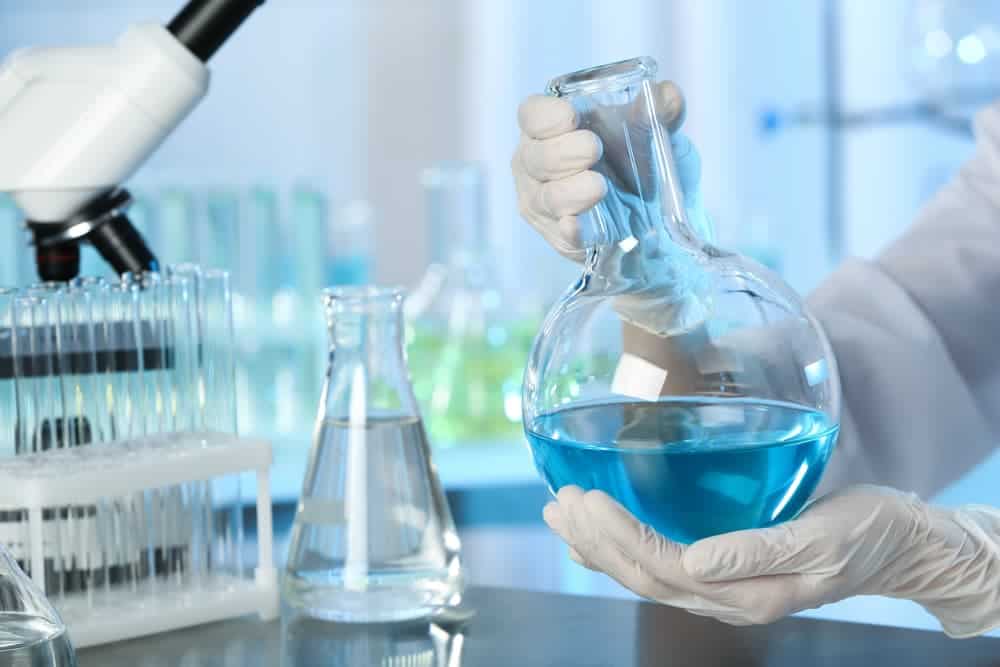
Making AdBlue sounds simple, and in principle it is, but the standard it has to meet is strict. We combine high purity urea with deionised water in the exact AUS 32 ratio, under controlled conditions that keep contamination out at every stage.
The purity requirement is the hard part. Because the finished solution is sprayed into a sensitive catalytic system, even small impurities in the water, the urea or the equipment can put a batch out of specification. For that reason we lab test and certify every batch we produce against ISO 22241 before it leaves our site, so customers can be confident the product is exactly what it should be. Producing to that standard consistently is what separates a genuine AdBlue supplier from a cheaper and riskier alternative.
What Is the Urea in AdBlue?
Urea is a compound of nitrogen and carbon. The urea used in AdBlue is a high purity, synthetically manufactured grade, produced industrially by reacting ammonia with carbon dioxide under controlled conditions. It belongs to the same chemical family as the urea found in nature, but it is made to a far higher purity than anything found naturally, precisely because vehicle emissions systems are sensitive to contamination.
This is the point most of the myths get wrong. The urea in AdBlue is not collected from any living thing. It is a manufactured chemical, made to an exacting standard.
Why AdBlue Uses Deionised Water and Not Tap Water
Deionised water is water that has had its mineral ions removed, which makes it the purest practical form of water. AdBlue uses it for one simple reason. Tap water contains minerals and dissolved ions such as calcium and magnesium, and these would react inside the vehicle’s exhaust treatment system, leaving deposits that can damage the catalyst and the injector.
We are sometimes asked whether topping up AdBlue with tap water would make it go further. It would not. Diluting AdBlue with tap water shifts the concentration away from the 32.5 percent specification and introduces contaminants, and the result is a warning light at best and an expensive repair at worst.
Is AdBlue Dangerous or Harmful?
AdBlue is not classified as a hazardous substance and is safe to handle with sensible care. It is not flammable, not toxic in normal use and not harmful to the environment in the quantities involved.
It can be a mild irritant, so if AdBlue gets on your skin the advice is simply to rinse it off with clean water, and to rinse with plenty of water if it gets in your eyes. A spill can be cleaned up with water, though it may leave a white crystalline residue as it dries, which is just the urea and wipes away easily. It should be stored out of direct sunlight and away from extreme heat to preserve its quality.
Buy AdBlue From a UK Manufacturer
Now you know exactly what AdBlue is made of, a clean solution of high purity urea and deionised water and nothing else. As one of the largest AdBlue manufacturing sites in the UK, we supply it in everything from 10 litre cans to bulk deliveries, all tested and certified to standard.
If you have a question about AdBlue, or would like to discuss supply for your fleet, please get in touch.